Shipwrights of Indonesia: The Craft Lineages Behind Modern Yacht Builds
Updated: August 2026
The shipwrights of Indonesia are organised not by companies but by lineages: family and village traditions — most famously the Konjo-speaking master builders of South Sulawesi — that transmit hull geometry, timber judgement and joinery through decades-long apprenticeships. Modern yacht programs succeed here by recruiting and managing these lineages, not by replacing them.
Lineage, not factory: how the craft is actually organised
Western yacht building is institutional — design offices, production lines, certified welders. Indonesian traditional shipbuilding is genealogical. A master builder, the punggawa, leads a crew drawn substantially from his own extended family; his authority rests on the vessels he and his forebears have launched. There are no drawings in the classical method: the punggawa carries proportional rules in memory, setting keel length, beam and frame spacing by ratios refined over generations. Sons and nephews begin as timber carriers, graduate to fastening and planking, and — if they show the eye for it — inherit the geometry itself in their forties. Understanding this structure explains almost everything about commissioning here: you are not hiring a facility, you are engaging a tradition with its own rhythms, pride and chain of authority.
The major craft streams
South Sulawesi’s builders dominate large timber construction and supply the phinisi fleet that defines Indonesian expedition charter. But they are not alone. Madurese and Javanese coastal yards carry their own lineages, strong in fishing vessels and workboats, with distinctive hull forms per port. Kalimantan communities hold deep knowledge of ironwood — the near-indestructible ulin used for keels — and its selection and seasoning. Around the eastern islands, boatwrights build the outrigger and small-craft traditions that still move most people in the archipelago. A serious national build program knows which stream to engage for which task, which is exactly the logic behind our nationwide build network.
Old hands, new materials
The stereotype says traditional builders cannot adapt to modern specifications. Practice says otherwise — with the right structure. Shipwrights raised on adze and chisel handle epoxy laminating, vacuum bagging and modern fastening systems well, because the underlying virtues transfer: material judgement, patience, dimensional discipline by eye and hand. What the transition genuinely requires is translation — engineers and supervisors who convert class-rule drawings into stage-by-stage instructions, verify torque, laminate schedules and moisture content, and give feedback in terms the crew’s tradition respects. That supervision layer is where hybrid builds succeed or fail, and it is the core of the managed custom phinisi program.
Recruiting a shipwright team for your build
| What you engage | How it is verified |
|---|---|
| The punggawa’s launch record | Named vessels, owners contactable |
| Crew depth and continuity | Core team on contract, not day labour |
| Timber sourcing chain | Documented species, legality and seasoning |
| Modern-method experience | Prior epoxy/laminate projects inspected |
| Supervision interface | Named supervisor with authority both ways |
Programs that respect the lineage while enforcing the checklist get remarkable boats. The overall commercial structure around such teams is described in our custom build program.
Why this matters to an owner
Because the hands are the product. Two vessels with identical specifications differ in the fairness of their planking, the tightness of their joinery and the longevity of their seams — differences that trace directly to which lineage built them and how well it was managed. Owners who invest a little understanding in the craft culture consistently report better builds and better relationships across the years of ownership that follow. The wider industrial map these craftsmen operate within is drawn in how Indonesia’s boat-building network works. To meet the teams behind our current projects: WhatsApp +62 811-2859-0000 or [email protected].
The economics that keep the lineages alive
Craft traditions survive on order books, not nostalgia. The honest threat to Indonesian shipwright lineages over the past generation was economic: as coastal trade motorised and steel took the cargo routes, the traditional yards’ original market shrank, and with it the incentive for sons to spend twenty years learning timber. The expedition-charter economy reversed that arithmetic. A steady pipeline of yacht and charter-vessel commissions now pays master-builder wages that compare well with any trade in the region, apprenticeships have waiting lists in the strong villages, and the skills are being exercised at the demanding end — fair hulls, tight seams, survey-grade structure — rather than fading into repair work. Owners are part of this system whether they think about it or not: every properly contracted build is a transfer of resources into the lineage that keeps it teaching. It is one of the rare corners of the luxury economy where the purchase itself is the preservation mechanism.
Indonesian shipwrights — frequently asked questions
Who are the Konjo shipwrights?
Konjo-speaking communities of coastal South Sulawesi whose master builders have constructed large timber vessels for generations. They remain the principal lineage behind phinisi construction and are widely engaged by modern yacht programs across Indonesia.
Do traditional Indonesian shipwrights work from drawings?
Classically no — proportional rules are carried in memory by the master builder. Modern managed builds pair that skill with engineered drawings and a supervision layer that translates class requirements into the crew’s working method.
Can traditional shipwrights build to classification standards?
Yes, when the program provides plan approval, staged surveys and a supervisor who bridges both worlds. The craftsmanship itself routinely exceeds minimums; what class adds is documentation and verified consistency.
How long is a shipwright apprenticeship in Indonesia?
Effectively a career: boys start with timber handling in their teens, master planking and fastening over one to two decades, and only a minority inherit the full geometric knowledge required to lead builds as master.
Keep reading
Yard Life
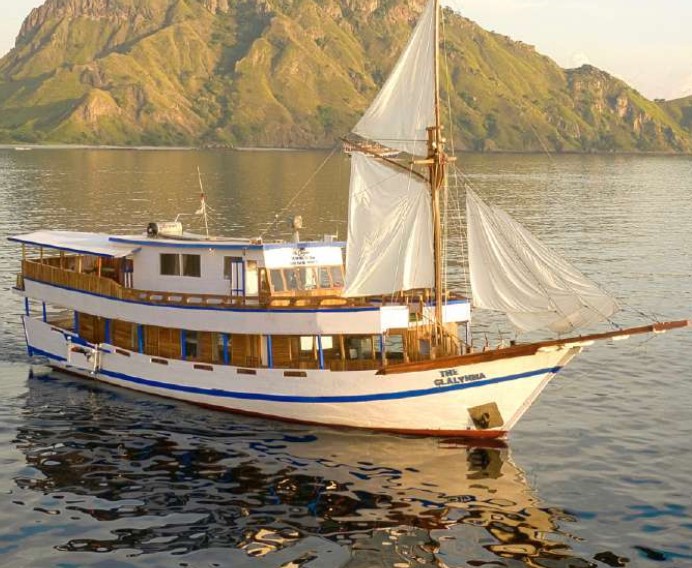
Small Shipwright Workshops of Bali: Keeping Wooden Skills Alive
Behind Bali's headline yacht projects works a quieter tier: small shipwright workshops — often family crews of a handful of…
Yard Life
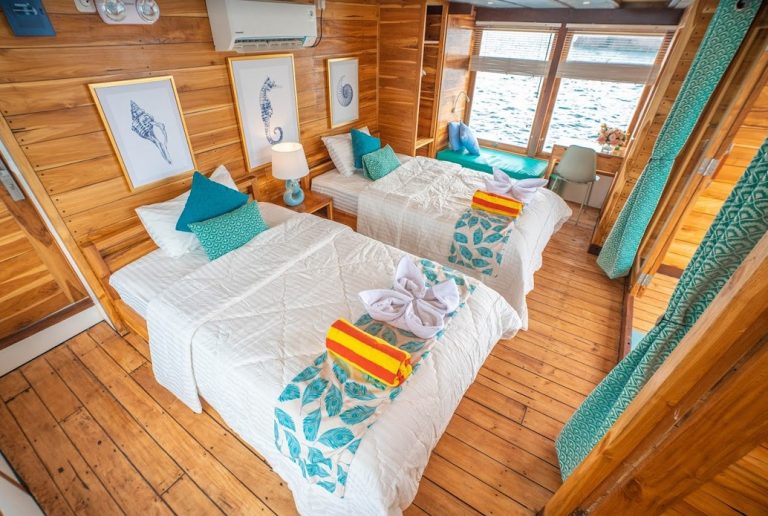
Balinese Design Language Afloat: Carving, Stone and Textile at Sea
Bali has a design language the world already recognises — carved timber, volcanic stone textures, hand-woven textiles, the calm geometry…
Yard Life
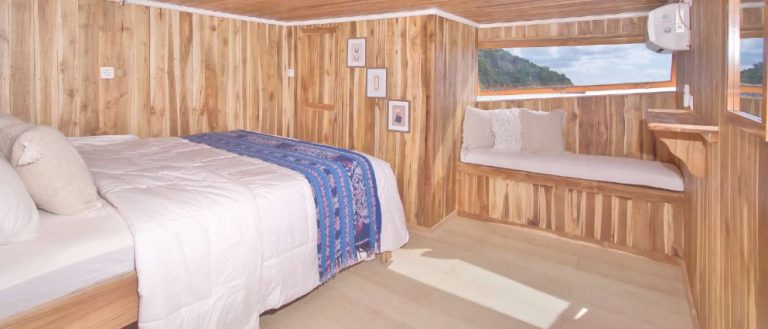
Interior Craftsmen of Bali: Joinery Studios Behind the Yachts
The interiors that distinguish Bali-built yachts are made largely off the waterfront, in joinery studios scattered through the island's furniture…