Marine HVAC in the Tropics: Specifying Air-Conditioning for Bali-Built Yachts
Updated: August 2026
Marine HVAC in the tropics is a design discipline, not an accessory: Indonesian conditions — 30°C seawater, 30°C air, humidity above 80% — roughly double the cooling load a temperate-market calculator assumes. Yachts built or refitted in Bali need loads computed for this climate, ducting engineered for condensation, and a service plan that keeps guests cold in Komodo in October.
Why temperate rules of thumb fail here
The standard shortcuts — so many BTU per cubic metre of cabin — were calibrated for Mediterranean summers with 25°C seawater and dry nights. Indonesia offers neither. Warm seawater raises condensing temperatures and cuts unit capacity precisely when demand peaks; relentless humidity means half the work is latent load — wringing water out of air — before temperature even drops; and glass area under equatorial sun adds solar gain that temperate charts underrate. The honest method is a proper heat-load calculation per compartment: insolation by orientation and glazing, occupancy, equipment heat, infiltration, and target conditions stated explicitly. Systems sized this way run at 70% on the worst afternoon; systems sized by brochure run flat out and still lose, which is why HVAC sits in the engineering package of every Bali refit we scope.
Chilled water versus DX for 20–45 metre vessels
| Architecture | Best fit | Trade-offs |
|---|---|---|
| DX (direct expansion) | Up to ~20m, day boats, budget refits | Simple, modular; refrigerant runs limit layout |
| Chilled water | 20–45m, crewed yachts, charter | Central chillers, quiet cabins, redundancy; higher install cost |
| Hybrid (VRF marine) | Selected modern refits | Efficiency gains; parts and service depth still maturing regionally |
Above roughly 20 metres, chilled water usually wins on the metrics owners feel: cabin noise, temperature stability and the ability to lose one chiller and keep the boat comfortable. Redundancy sized N+1 — three chillers carrying a two-chiller load — is the charter-fleet standard for good reason.
Installation discipline: where tropical systems are won
Most tropical HVAC misery is installed, not designed. Ducting must be insulated continuously and vapour-sealed, or it rains inside joinery; condensate trays need real drains with traps, not optimistic tubing; seawater circuits deserve titanium or cupronickel heat exchangers, proper strainers and accessible anodes because 30°C biology grows in warm pipes; and returns must be ducted deliberately so cold air sweeps cabins rather than short-circuiting. Controls matter too — humidity-aware thermostats and night setbacks cut generator hours materially. Our commissioning checklist runs to three pages of exactly this, enforced through the project management desk on new builds and refits alike.
Servicing reality in Indonesia
An honest specification also asks: who fixes it in Labuan Bajo in high season? Mainstream marine brands with regional parts depth beat exotic efficiency champions whose compressors wait six weeks in customs. We hold commissioning records and spares schedules for the systems we install, run seasonal service from Benoa through the boat repair team, and design chiller rooms so a technician can actually reach what fails. Owners planning charter operations should treat a mid-season HVAC failure as a revenue event, not a comfort event — and specify redundancy accordingly.
Specify cold, deliver cold
Send us your GA and cruising profile and we will return a compartment-by-compartment load calculation with a system architecture and honest budget band. WhatsApp +62 811-2859-0000 or [email protected]. The hull-side maintenance twin of this topic lives in antifouling in Bali.
The power budget: HVAC drives the electrical design
Air-conditioning is the largest continuous electrical load on a tropical yacht, so the HVAC decision is secretly the generator decision. A chilled-water plant for a 30-metre vessel can draw 15–30 kW at tropical load — sizing not just generator capacity but the number of sets, their load-sharing logic and their sound insulation, because the generator runs whenever guests want to be cold, which is always. The modern alternative reshaping specifications is the hybrid bank: large lithium storage absorbing night-time load so generators sleep during the hours silence matters most, recharged in daylight running or by solar canopy on suitable designs. Whether that investment pays depends on usage pattern — liveaboard charter favours it strongly; occasional private use less so — but the calculation must happen at design time, because cable runs, battery rooms and cooling for the electronics all claim space the GA must reserve. The uncomfortable rule of thumb: if HVAC was specified after the electrical system, one of them is wrong, and in the tropics it is usually the guest experience that pays.
Marine HVAC — frequently asked questions
How do I size air-conditioning for a yacht in Indonesia?
By compartment heat-load calculation under local conditions — 30°C seawater and air, humidity above 80%, solar gain by glazing orientation — not by generic BTU-per-volume tables, which understate tropical loads by 40–100%.
Is chilled water or DX better for a tropical yacht?
Above roughly 20 metres, chilled water: quieter cabins, stable temperatures and N+1 chiller redundancy that keeps guests comfortable through a unit failure. DX remains sensible for smaller vessels and simpler refits.
Why does yacht air-conditioning underperform in the tropics?
Warm seawater cuts condensing capacity, humidity doubles latent load, and installation faults — uninsulated ducting, starved seawater flow, short-circuited returns — waste what capacity remains. Correct sizing plus commissioning discipline solves all three.
How often should marine HVAC be serviced in Indonesia?
Seawater strainers and condensate paths monthly in season, coils and refrigerant health annually, and heat-exchanger anodes on the maintenance calendar. Warm, biologically rich water punishes neglected seawater circuits faster than any temperate base.
Keep reading
Uncategorized
Komodo Yacht Charter Before You Build: 2026 Owner’s Guide
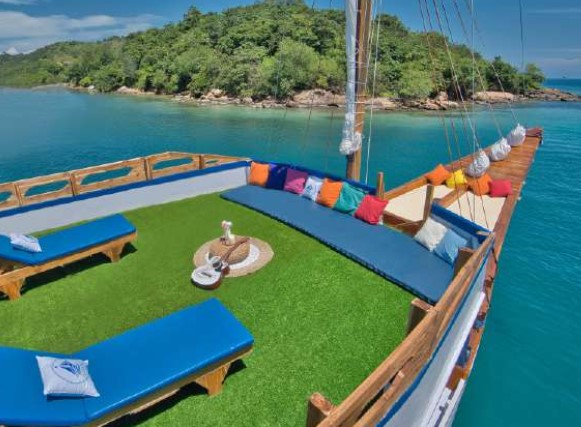
The fastest way to pressure-test a custom phinisi design is to charter a proven one first. A weekend Komodo yacht…
Guides
Catamaran Builder Bali: From Benoa Design Studio to Sulawesi Yard
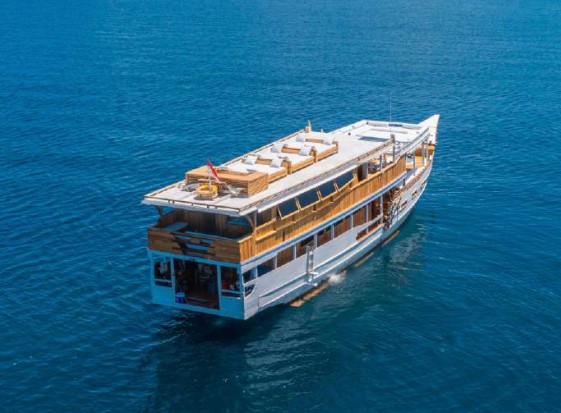
Ask where Indonesian catamarans are built and you get a two-part answer: they are conceived in Bali and constructed, more…
Build Guides
2027 Bali Building Outlook: Catamarans Rise, Phinisi Endure
Bali enters 2027 with its boatbuilding order books in the healthiest shape of the decade. Four currents define the outlook:…