Antifouling in Bali: Coatings, Schedules and Costs for Tropical Waters
Updated: August 2026
Antifouling in Bali works harder than almost anywhere on earth: warm water, high nutrient loads and year-round growth mean coatings that last three seasons in the Mediterranean need renewal every 12–18 months here. Choosing the right system for a wooden or composite hull — and budgeting the haul-out cycle honestly — is basic seamanship economics in Indonesia.
Why tropical fouling is a different opponent
Fouling pressure scales with water temperature and biology, and the seas around Bali run 27–30°C all year with rich plankton flows through the Badung and Lombok straits. Barnacles, tubeworms and weed that pause for a northern winter never pause here. The practical consequences are measurable: an unprotected hull can lose several knots and burn 20–30% more fuel within months, saildrives and propellers foul into lumps, and raw-water intakes choke. For charter vessels the stakes compound — schedules do not wait for an emergency haul-out. That is why every maintenance plan we write for the region treats antifouling as a scheduled operating cost, not an occasional repair.
Choosing a coating: ablative, hard or foul-release
Three families dominate. Ablative (self-polishing) coatings wear away progressively, shedding fouling with the paint; they suit displacement hulls and give wooden vessels a forgiving, easily renewed system. Hard antifoulings resist abrasion and suit fast hulls and boats that are scrubbed between haul-outs, but build up layers that eventually need stripping. Foul-release silicones carry no biocide at all — growth simply loses grip at speed — and reward vessels that move often, though they are costlier and demand careful application. For traditional timber hulls we generally specify quality ablatives over proper primers and fresh seam care; for composite catamarans in charter service, hard or hybrid systems with mid-cycle in-water cleaning. The refit context for these choices is described on our Bali refit yard page.
Realistic schedules and cost bands at Benoa
| Vessel type | Renewal cycle | Indicative haul-out + antifoul band |
|---|---|---|
| Composite cruiser 12–18m | 12–18 months | USD 3,000–7,000 |
| Sailing catamaran 15–22m | 12–18 months | USD 6,000–14,000 |
| Timber phinisi 25–40m | 10–14 months (with survey) | USD 12,000–30,000 |
Bands are indicative for standard scope — lift or slip, wash, prep, two coats, anodes — and move with steel prices, paint choice and any timber or osmosis work uncovered on the hardstand. Wooden vessels pair the antifoul cycle with seam inspection and worm checks, which is exactly the discipline the annual slipping tradition evolved to serve. Day-to-day mechanical support around the cycle runs through our Benoa boat repair team.
Application quality decides half the result
The same paint can perform brilliantly or poorly depending on preparation: dry timber or laminate, correct primer, seam compound cured, coats applied at specified thickness inside the overcoating window, and anodes renewed rather than reused. Skipping preparation to save two hardstand days is the most expensive economy in the tropics, because the coating fails from beneath and the next cycle arrives early. Our yard supervisors sign off preparation stages before paint opens — the same milestone discipline that runs the rest of the Benoa shipyard network.
Put your boat on a cycle, not a crisis
Send us your vessel type, usage pattern and last haul-out date, and we will return a coating recommendation, a renewal calendar and a written cost band for the next three years. WhatsApp +62 811-2859-0000 or [email protected]. Cooling-system care in the same climate is covered in marine HVAC in the tropics.
Environmental rules are tightening — plan for them
Antifouling is chemistry released into the sea, and the regulatory direction worldwide is one-way: stricter. The old tributyltin coatings are long banned globally; copper-based biocides face increasing scrutiny and localised restrictions in sensitive areas; and Indonesia’s marine-park authorities — Komodo included — are progressively more attentive to what fleet operators put in the water. For owners this argues two practical policies. First, buy quality within the compliant families: modern copper-oxide ablatives and biocide-free foul-release systems both have long regulatory runways, while bargain-tier imports of uncertain chemistry are the coatings most likely to be orphaned by a rule change. Second, control the workspace: haul-out washdown water and sanding residue belong in a yard with containment, not running off a village beach into a reef — both for the reef’s sake and because environmental enforcement increasingly follows tourism money. A vessel that operates in protected waters should be able to show a paint system and a maintenance yard it is proud of; that combination is quickly becoming part of what a charter licence, an insurer and a conscientious owner all expect to see.
Antifouling — frequently asked questions
How often should a yacht be antifouled in Indonesian waters?
Every 12–18 months for most composite vessels and 10–14 months for working timber hulls, tightened or relaxed by usage and coating type. Tropical growth pressure simply does not allow the multi-year cycles common in cooler seas.
What antifouling is best for a wooden phinisi?
A quality ablative system over correct primers, applied after seam inspection and caulking repair on dry timber. Ablatives renew easily each cycle and avoid the layer build-up that plagues hard coatings on flexible wooden hulls.
Can antifouling be done in the water in Bali?
Cleaning can be done in-water by divers between cycles, but coating renewal cannot — paint needs a dry, prepared surface and controlled application thickness. Plan a proper haul-out or slipping for every repaint.
Why does tropical antifouling fail early?
Almost always preparation: damp substrate, expired overcoating windows, thin film thickness or dead anodes. The biology gets the blame, but the coating usually lost the fight during application, which is why supervised preparation sign-off matters.
Keep reading
Uncategorized
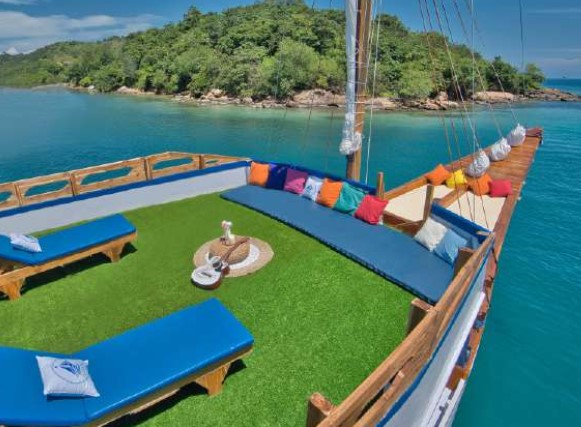
Komodo Yacht Charter Before You Build: 2026 Owner’s Guide
The fastest way to pressure-test a custom phinisi design is to charter a proven one first. A weekend Komodo yacht…
Guides
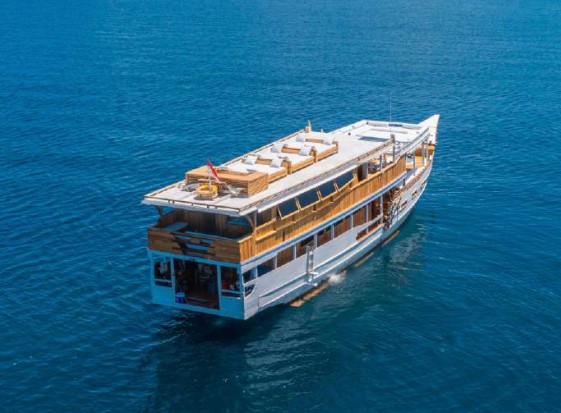
Catamaran Builder Bali: From Benoa Design Studio to Sulawesi Yard
Ask where Indonesian catamarans are built and you get a two-part answer: they are conceived in Bali and constructed, more…
Build Guides
2027 Bali Building Outlook: Catamarans Rise, Phinisi Endure
Bali enters 2027 with its boatbuilding order books in the healthiest shape of the decade. Four currents define the outlook:…