Glass Bridges and Beach Clubs: Bali’s Experiential Boat Builds
Updated: August 2026
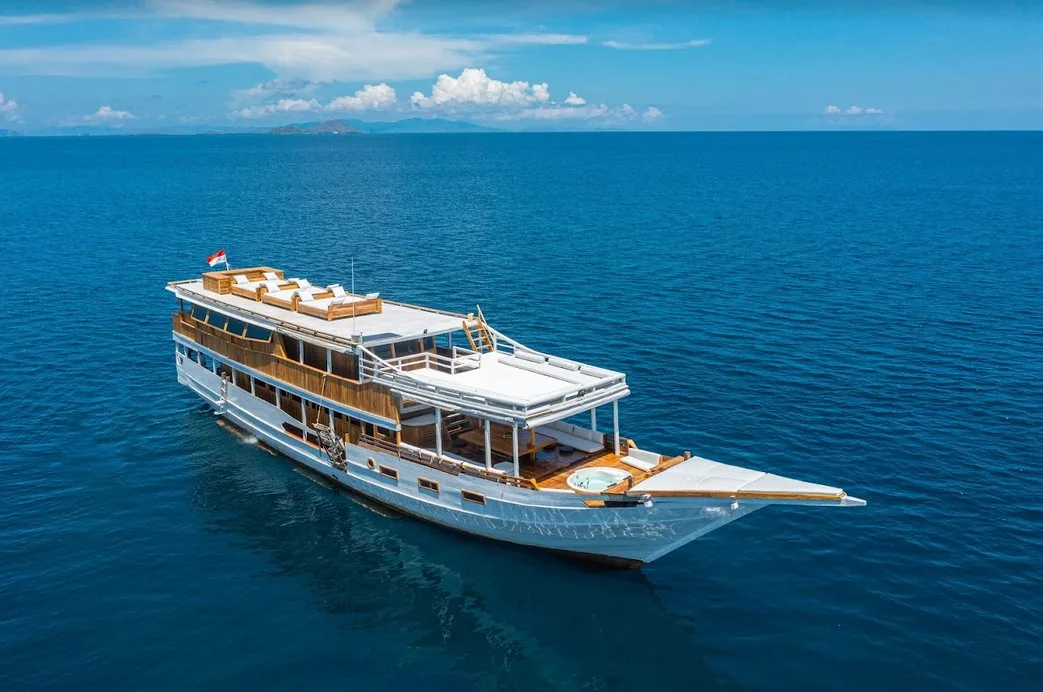
A new category of commission has arrived in Bali’s yards: boats designed as venues. Beach-club operators, event brands and hospitality groups are ordering hulls with glass floor panels, open-plan lounge decks, DJ-grade sound, galley bars and lighting scenes — floating extensions of the island’s experience economy. These experiential builds make unusual demands on structure, weight and safety, and they reward yards that treat showmanship as an engineering problem.
The venue brief: what operators ask for
The experiential brief reads like an events rider translated to naval architecture. Operators want unobstructed social space — wide, level decks without the furniture of traditional layouts; sight lines from every guest position to the water and the sunset; a bar that serves properly rather than a galley that apologises; sound and light systems specified by professionals; and signature moments: a glass panel over blue water, a bow net lounge, a swim terrace that becomes a stage.
Underneath the glamour, the operators’ quieter requirements are stricter than any private owner’s: guest counts that meet paperwork, boarding that processes groups fast, and turnaround features that let the same hull run afternoon and evening formats. It is the day-charter discipline, amplified — a lineage we cover in our guest-boat build guide.
Glass at sea: engineering the showpiece
Glass elements are the category’s signature and its hardest engineering. A floor panel or bulwark window in a working vessel is a structural component: marine-laminated glass engineered with its frame as a system, sized against point loads and flexing, sealed against a life of sun and salt, and replaceable without surgery. The showpiece must also fail safely — which is why serious builds specify laminated assemblies and protective design rather than trusting a single pane.
Weight and placement matter as much as strength. Glass is heavy and usually wants to live exactly where designers put drama — low and central for floors, high and wide for view walls — so the naval architect’s weight study governs what the concept sketch may keep. The collaboration loop described in our design-and-build process exists precisely for briefs like these.
Sound, light and power: the invisible half of the build
A venue boat’s atmosphere runs on electricity, and the electrical brief is where amateur builds sink. Professional sound reinforcement, scene lighting, refrigeration for a real bar, and the house systems of a working vessel stack into a power budget demanding generous generation, proper distribution and acoustic isolation so the generator never performs a duet with the DJ. Vibration and rattle — trivia on a cruiser — are showstoppers on a boat selling ambience, so equipment mounting and joinery detailing are specified to venue standards.
Wise operators bring their AV integrator into the design phase, the same way owners bring interior designers: cable paths, speaker positions and control racks drawn before the deck closes, not chased through it after.
Safety at scale: the licence behind the party
Everything above only matters if the boat may legally and safely carry its crowd. Experiential builds are commercial vessels, specified from the keel for their intended guest numbers: stability calculated for people clustering along one rail at sunset, egress and lifesaving equipment scaled to the manifest, crew positions that can actually see and manage a lively deck, and railings and glass that protect exuberant guests from their own evening. Operators who build these requirements in from day one get a venue with a clean paper trail; those who improvise get inspection trouble wearing party dress.
Bali’s yards are well placed for this category — the island’s hospitality economy supplies the designers, AV trades and finish workshops, and the build district supplies the hulls. The result, done well, is a genuinely new kind of asset: a venue with a wake.
Frequently Asked Questions
Can glass floors really be built into Bali boats?
Yes — as engineered structural assemblies using marine-laminated glass in designed frames, specified with the naval architect rather than added as decor.
What size are experiential builds typically?
Most venue briefs land between 15 and 30 metres — enough deck for a crowd and systems, small enough for island moorings and economics.
How do these builds handle big sound systems?
With a professional power budget: adequate generation, isolated mounting, acoustic treatment and AV integration designed before the deck closes.
Are venue boats harder to certify?
They carry commercial-vessel requirements scaled to guest numbers. Designed in from the start, certification is routine; retrofitted, it is expensive.
Build the venue your brand is missing
If your concept needs a hull under it, the Bali Yacht Builder desk will scope structure, systems and guest capacity around the experience — WhatsApp +62 811-2859-0000 or [email protected].
Keep reading
Build Guides
2027 Bali Building Outlook: Catamarans Rise, Phinisi Endure
Bali enters 2027 with its boatbuilding order books in the healthiest shape of the decade. Four currents define the outlook:…

Build Guides
Build Timelines in Bali: Why Island Logistics Add Weeks, Not Months
The honest answer about Bali build timelines: island logistics add weeks to a well-run schedule, not months — and the…
Build Guides
The Two-Island Build: Hulls From Sulawesi, Fit-Out in Bali
Indonesia's most proven route to a large timber vessel is a two-island relay: the hull takes shape in the master…