Boat Building in Indonesia: How the National Craft Network Really Works
Updated: August 2026
Boat building in Indonesia is not one industry but four: traditional timber yards in Sulawesi, industrial steel and aluminium shipyards around Batam, fiberglass production plants in Java, and design-and-finishing studios in Bali. Understanding which region does what is the difference between commissioning well and commissioning blind.
The honest map of Indonesian boat building
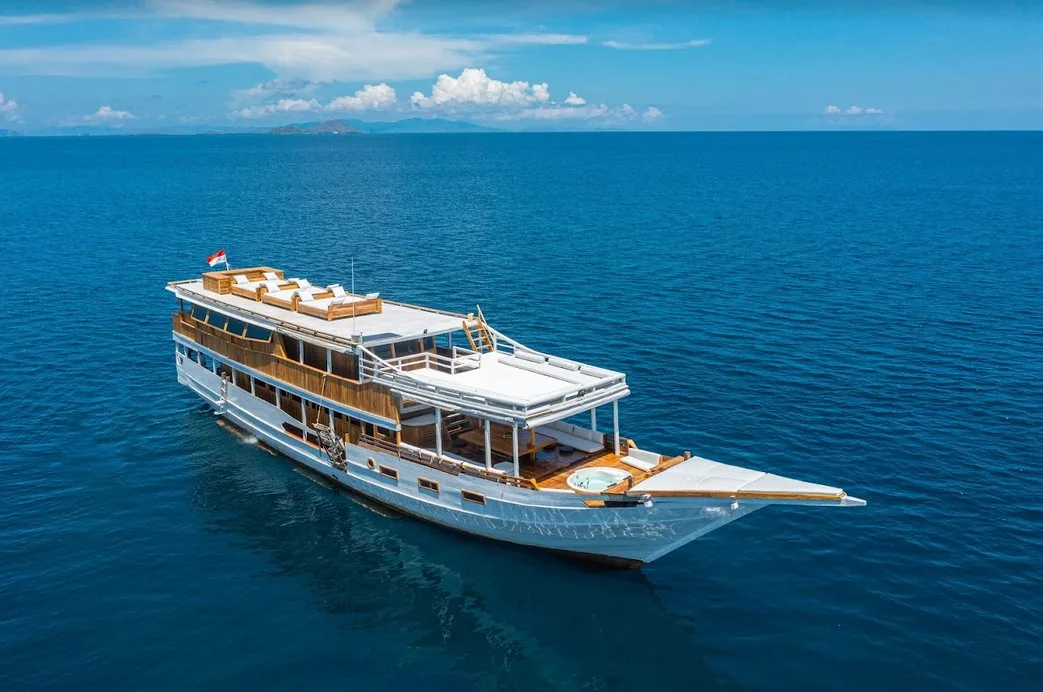
Ask where boats are built in Indonesia and you will get a different answer in every port. All of them are partly right. South Sulawesi remains the heartland of large timber construction — the phinisi lineage — where master builders still shape ironwood and teak hulls of thirty to fifty metres using knowledge passed through families. Batam, facing Singapore, hosts the industrial end: steel and aluminium yards building tugs, crew boats, ferries and the occasional expedition yacht to classification-society rules. Java’s coastal cities run production fiberglass lines for patrol boats, speedboats and commercial fishing vessels. And Bali, which builds fewer hulls than any of them, has become the country’s client-facing layer: naval architecture, interior design, project management and finishing for owners who will never visit a jungle slipway.
Why design-in-Bali, hull-in-Sulawesi wins
The model that consistently produces the best large custom vessels pairs these strengths instead of choosing between them. Timber hull construction is a Sulawesi art; owner communication, 3D design, systems engineering and finish quality are Bali disciplines. Splitting the build this way puts each phase where it is done best, and the cost structure follows: master carpentry priced in Sulawesi, high-specification outfitting priced in Bali, with the owner supervising both through one accountable studio. That division of labour is exactly how our own program operates, documented across the Indonesia-wide build network and the Bali boat builder pages.
What each region builds best
| Region | Core strength | Typical vessels |
|---|---|---|
| South Sulawesi | Large timber hulls, traditional joinery | Phinisi 24–50m, expedition sailers |
| Batam & Riau Islands | Steel/aluminium, class-rule fabrication | Workboats, ferries, expedition platforms |
| Java | Series fiberglass production | Patrol craft, speedboats, fishing fleets |
| Bali | Design, project management, finishing | Custom yachts, refits, owner supervision |
How foreign owners actually commission here
Three questions decide whether a foreign build goes smoothly. First, the legal wrapper: a build contract enforceable in a jurisdiction you trust, with staged payments tied to verified milestones rather than dates. Second, supervision: someone whose duty runs to you — not the yard — inspecting timber moisture, laminate schedules and systems installation before each payment releases. Third, realistic timelines: a 30-metre custom timber vessel takes eighteen to thirty months from contract to launch, and any promise dramatically shorter deserves scepticism. Owners who anchor those three points, usually through a managed custom phinisi program, get the craftsmanship without the folklore-era risk.
Where the network is heading
The interesting change of the last decade is not new factories; it is integration. Traditional yards now laminate composite decks over timber frames, industrial yards subcontract joinery to Sulawesi carpenters, and Bali studios feed 3D-modelled specifications upstream to both. The result is a national craft network that can deliver a classed, insured, export-ready vessel while keeping the hand-built character buyers come to Indonesia for. The craftsmen behind that network are profiled in Shipwrights of Indonesia.
Commission through one accountable door
Our studio contracts, supervises and delivers across this entire map — timber in Sulawesi, composite in partner yards, finishing at Benoa. Start the conversation on WhatsApp +62 811-2859-0000 or [email protected].
Timelines and materials move between islands
One under-appreciated feature of the national network is logistics: an Indonesian build is also a shipping operation. Ironwood keels and teak planking travel from Kalimantan and Sulawesi stockyards to the hull yard; engines, generators and navigation electronics arrive imported through Surabaya, Jakarta or Batam; laminates and resins come from regional distributors with cold-chain discipline; and the finished hull itself may sail a thousand kilometres to its fit-out berth. Programs that manage this flow well hold buffer stock of long-lead items, sequence import paperwork months ahead, and build the delivery voyage into the master schedule. Programs that manage it poorly discover that a missing gearbox in month fourteen quietly costs a quarter of construction. When you compare builders, ask who owns the logistics plan — the yard, the studio or nobody — because in an archipelago, the supply chain is as much a part of the craft as the joinery. It is also why integrated programs quote longer but deliver closer to their promised dates.
Indonesian boat building — frequently asked questions
Which part of Indonesia builds the best boats?
Each region leads a different discipline: South Sulawesi for large timber hulls, Batam for steel and aluminium class-rule work, Java for series fiberglass, Bali for design and finishing. The best projects combine regions rather than picking one.
Is it safe for a foreigner to commission a boat in Indonesia?
Yes, when the build runs on an enforceable milestone contract with independent supervision. Problems almost always trace to handshake deals and unverified payments, not to the quality of Indonesian craftsmanship itself.
How long does a custom boat build take in Indonesia?
Realistically eighteen to thirty months for a 30-metre custom timber vessel from signed contract to launch, and twelve to twenty months for mid-size composite builds. Faster promises usually hide unpriced work.
Do Indonesian yards build to international classification standards?
Several do. Steel and aluminium yards in Batam routinely build under class survey, and timber new-builds can be constructed to classification-society and flag-state requirements when the contract specifies it from day one.
Keep reading
Build Guides
2027 Bali Building Outlook: Catamarans Rise, Phinisi Endure
Bali enters 2027 with its boatbuilding order books in the healthiest shape of the decade. Four currents define the outlook:…
Build Guides
The Two-Island Build: Hulls From Sulawesi, Fit-Out in Bali
Indonesia's most proven route to a large timber vessel is a two-island relay: the hull takes shape in the master…

Build Guides
Build Timelines in Bali: Why Island Logistics Add Weeks, Not Months
The honest answer about Bali build timelines: island logistics add weeks to a well-run schedule, not months — and the…