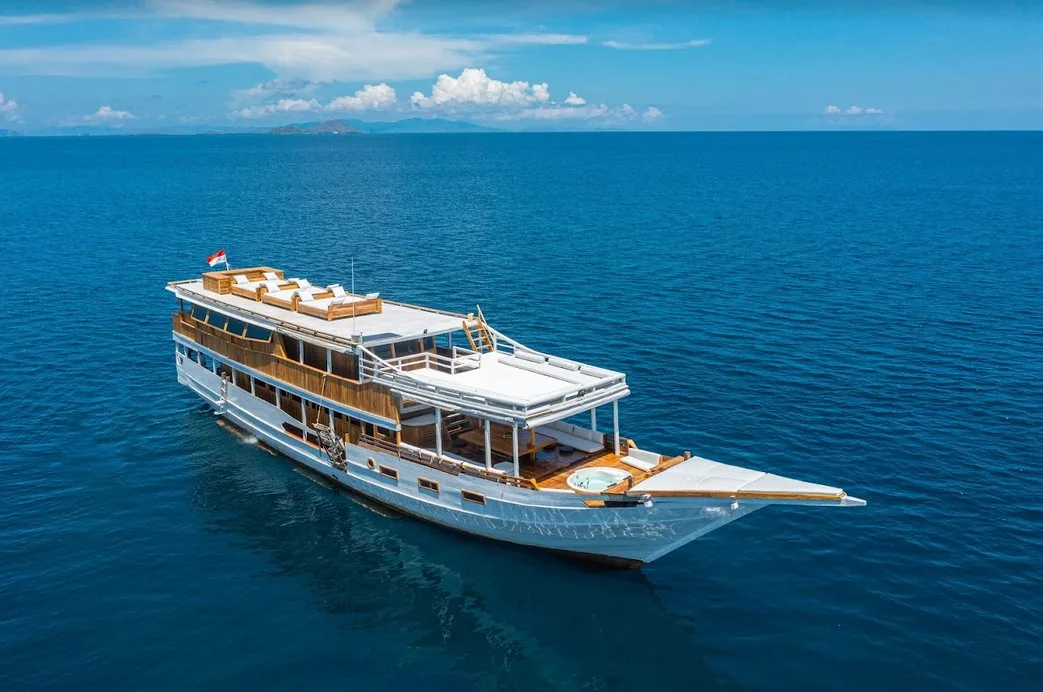

Bespoke Yacht Design in Bali for the Ultimate Komodo Itinerary
Updated: May 2026
- Integration of traditional Indonesian Phinisi shipbuilding with advanced naval architecture.
- Complete personalization of layouts for activities like professional diving, entertaining, or long-range cruising.
- Utilization of prized local materials like ironwood and teak, shaped by master Balinese artisans.
The Intersection of Vision and Heritage at a Balinese Shipyard
The air in the South Bali shipyard hangs thick with the sweet, sharp scent of curing teak and the faint tang of salt carried on the breeze from the nearby strait. A rhythmic, percussive tapping echoes from within the cavernous hull of a 45-meter vessel, a sound that has defined Indonesian seafaring for centuries. Here, under the tropical sun, the abstract concept of bespoke yacht design in Bali becomes tangible. It’s not merely a process of manufacturing; it’s a living collaboration between a client’s vision, a naval architect’s precision, and the inherited knowledge of Bugis shipwrights whose ancestors mastered the art of shipbuilding long before the first European charts of the archipelago were drawn. This is where the journey to Komodo truly begins—not at the dock in Labuan Bajo, but here, with the laying of an ironwood keel that weighs more than 20 tons and the careful selection of timber that will eventually glide through the turquoise waters of the Flores Sea. The creation of such a vessel is an immersive experience, a dialogue between modern luxury and ancient craft that culminates in a yacht uniquely capable of unlocking one of the planet’s last great wildernesses.
The Phinisi Reimagined: More Than a Replica, a Revolution
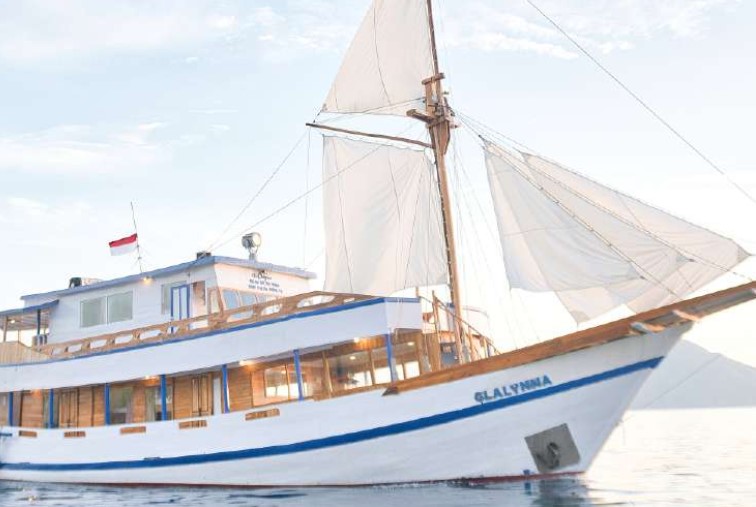
The traditional Indonesian Phinisi, a two-masted sailing ship, is a masterpiece of maritime heritage, so much so that its art of boatbuilding was inscribed on the UNESCO list of Intangible Cultural Heritage in 2017. Yet, the vessels emerging from Bali’s premier shipyards are not historical replicas. They are sophisticated, modern explorer yachts built in the Phinisi spirit. The design process begins with a deep respect for the classic form—the high bow, the sweeping lines, the expansive deck space—but quickly integrates 21st-century engineering. I spoke with Jean-Pierre, a lead designer at a prominent yard, who explained the evolution. “We use advanced CFD (Computational Fluid Dynamics) modeling to optimize hull efficiency for motor-sailing, reducing fuel consumption by up to 30% compared to older designs,” he noted. The keel is still laid with Ulin, or Bornean ironwood, one of the densest woods in the world, but it’s now bonded to a steel or aluminum frame for superior structural integrity. The entire build, which can take a team of 80 artisans over 24 months to complete, is a testament to this hybrid philosophy. The result is a vessel that possesses the soul of a traditional schooner but the performance, safety, and comfort of a world-class superyacht, a perfect platform for the 250-nautical-mile passage from Bali to the Komodo archipelago.
Designing for the Destination: How Komodo Dictates the Blueprint
A yacht intended for the Mediterranean is fundamentally different from one built for Indonesia. The ultimate Komodo itinerary demands a vessel designed with the region’s unique challenges and opportunities in mind. This is the core principle of the bespoke yacht design in Bali process. For instance, the waters around Komodo National Park are a diver’s paradise, home to over 1,000 species of fish and 260 species of coral. A client passionate about diving will require more than a simple swim platform. Their yacht’s blueprint will include a dedicated, climate-controlled dive center with state-of-the-art Nitrox and Trimix blending stations, a separate freshwater rinse tank system for delicate camera equipment, and perhaps a hydraulic aft platform that lowers 1.5 meters into the water for effortless entry. Similarly, exploring the park’s countless secluded bays and pink-sand beaches requires a vessel with a relatively shallow draft. This is where a custom-designed luxury catamaran excels, offering stability and access to areas a deep-keeled monohull simply cannot reach. The design must also account for self-sufficiency. With limited support infrastructure in the region, the yacht becomes a floating five-star resort. This means incorporating industrial-grade water makers capable of producing over 6,000 liters of fresh water daily, robust solar arrays to supplement twin 80kW generators, and extended-range fuel tanks to ensure a non-stop, multi-week expedition is possible without a single port call. The destination is not an afterthought; it is the primary author of the design brief, a philosophy that the finest Bali yacht builder champions.
The Anatomy of a Bespoke Build: A Journey from CAD to Christening
Commissioning a custom yacht is an intimate, multi-stage journey. It begins not with wood or steel, but with conversation. The initial conceptualization phase, lasting up to four months, involves intensive collaboration between the owner, the naval architect, and the interior designer. Every detail of the owner’s lifestyle is considered. How many guests? Formal or alfresco dining? A passion for astronomy requiring a gyrostabilized telescope on the top deck? These conversations are translated into a General Arrangement (GA) plan, the master document that governs the entire project. Once the GA is approved, the physical build commences with the keel-laying ceremony, a tradition-rich event marking the birth of the vessel. Sourcing the materials is a critical step; premier builders use only certified, sustainably harvested Indonesian hardwoods. As the superstructure takes shape over the next 12 to 18 months, the interior outfitting begins. This is where personalization reaches its zenith. We’re talking about hand-stitched leather wall panels, custom-milled marble for the en-suite bathrooms, and galleys equipped with professional-grade appliances from Gaggenau or Sub-Zero. The technological integration is just as crucial, with enterprise-level Wi-Fi, a Kaleidescape movie server holding 1,000+ films, and a fully integrated Crestron system controlling everything from lighting to blinds. A high-end navigation and communication suite from a brand like Furuno alone can represent an investment of over $150,000, ensuring safety and connectivity in the most remote locations.
Onboard Sanctuaries: Tailoring Spaces for the Komodo Experience
The true luxury of a bespoke yacht lies in how its spaces enhance the experience of the destination. For a Komodo expedition, this means creating a seamless connection between the interior and the extraordinary environment outside. The master suite, for example, is often designed with 180-degree forward-facing windows, allowing the owner to wake up to the iconic, prehistoric silhouette of Padar Island without leaving their bed. A private foredeck terrace attached to the suite becomes the perfect spot for morning yoga as the sun rises. The main saloon is no longer a formal, enclosed space. Instead, designers use vast, floor-to-ceiling sliding glass panels that disappear into the superstructure, merging the air-conditioned interior with the shaded aft deck to create a single, magnificent indoor-outdoor living area. This is where you’ll gather after a day spent observing Komodo dragons, which can weigh up to 90 kilograms, as detailed by Indonesia’s official tourism site. Entertainment is also re-imagined. A top-deck jacuzzi is standard, but a bespoke design might orient it specifically for sunset views over Gili Lawa Darat. An open-air cinema, with a screen that retracts into the ceiling, allows for watching David Attenborough documentaries under a canopy of stars, a truly surreal experience after spending the day swimming with the very manta rays—some with wingspans of 7 meters—featured on screen. These are the details that transform a vessel from a mode of transport into an integral part of the adventure, something only possible with a premier Bali yacht builder focused on custom Phinisi and luxury catamarans.
Quick FAQ: Commissioning Your Bali-Built Yacht
What is the typical timeline for a bespoke yacht build in Bali?
For a 35 to 45-meter Phinisi or luxury catamaran, the entire process from the initial design consultation to the final launch and sea trials typically spans 18 to 30 months. The exact duration depends heavily on the complexity of the interior outfitting and technical systems specified by the client.
How does the cost compare to European shipyards?
While the cost of high-end materials and imported systems like engines and navigation electronics is globally consistent, the exceptional value proposition in Bali comes from the world-class, yet competitively priced, artisan labor. This can result in a final cost for a comparable quality vessel that is 30-40% lower than builds from established yards in Italy or the Netherlands, without compromising on quality or safety standards.
What materials are predominantly used in a Bali-built luxury yacht?
The foundation of a traditional-style build is Indonesian hardwood, prized for its durability. The keel and structural frames are almost always made from Ulin (ironwood), while high-grade, sustainably sourced teak is used for decking, superstructures, and custom interior furniture. For more modern designs, builders frequently work with marine-grade steel and aluminum for hulls, combining them with composite superstructures to save weight.
Can a yacht built in Bali meet international safety and classification standards?
Absolutely. Esteemed builders ensure every vessel is constructed to meet and exceed the stringent requirements of international classification societies like RINA (Registro Italiano Navale) or Bureau Veritas. This certification is crucial, as it guarantees the yacht adheres to the highest global standards for safety, construction, and operational readiness, making it eligible for international registration and charter operations. This commitment to world-class standards is a hallmark of the top tier of bespoke yacht design in Bali.
Your Vision, Your Vessel, Your Voyage
A yacht is more than a possession; it is a platform for the experiences of a lifetime. It is the key that unlocks the ability to wake up in a different, impossibly beautiful anchorage each morning, from the volcanic slopes of Sangeang Api to the vibrant coral gardens of the Makassar Reef. The decision to commission a custom vessel in Bali is a decision to participate in a legacy of maritime excellence, to blend your personal vision with the unparalleled skill of Indonesian artisans. The result is not just a yacht tailored for the ultimate Komodo itinerary, but a piece of functional art, a sanctuary built by hand, ready to carry you to the furthest corners of the map. The journey begins with a single conversation, a spark of an idea that can be forged into a vessel as unique as your own ambition. To begin crafting the yacht that will define your future adventures, from Komodo to Raja Ampat and beyond, connect with the master craftsmen at Bali Yacht Builder and start the dialogue today.
Keep reading
Build Guides
2027 Bali Building Outlook: Catamarans Rise, Phinisi Endure
Bali enters 2027 with its boatbuilding order books in the healthiest shape of the decade. Four currents define the outlook:…
Build Guides
Build Timelines in Bali: Why Island Logistics Add Weeks, Not Months
The honest answer about Bali build timelines: island logistics add weeks to a well-run schedule, not months — and the…
Build Guides
The Two-Island Build: Hulls From Sulawesi, Fit-Out in Bali
Indonesia's most proven route to a large timber vessel is a two-island relay: the hull takes shape in the master…