Bali Custom Boat Builders vs. Buying Pre-Owned: Which Is Better?
Updated: May 2026
- Personalization: Custom builds allow for a bespoke layout, from engine room mechanics to interior finishes.
- Value: Pre-owned vessels depreciate less initially, but custom heritage craft like the Phinisi can retain exceptional value.
- Timeline: A pre-owned yacht is ready to sail, whereas a custom project requires an 18-to-30-month commitment.
The Editor’s View from the Yard
The air in the boatyards of South Sulawesi, a short flight from Bali, hangs thick with the scent of sawdust and clove cigarettes. It’s a humid, industrious perfume. Under the vast, corrugated iron roofs, the rhythmic tap-tap-tap of a hundred small hammers against ironwood planks creates a soundscape that has echoed here for centuries. You see the skeletons of future ships, their massive ribs curving towards the sky, dwarfing the men who shape them with adzes and handsaws. This is the genesis of a dream, the starting point of a conversation every prospective yacht owner in this part of the world must have with themselves: Do I create something new, something that is mine from its very first line on paper, or do I find a vessel with a history and make it my own?
The decision between commissioning a new vessel from Bali custom boat builders and acquiring a pre-owned yacht is not merely a financial one; it’s a philosophical one. It pits the allure of a blank canvas against the pragmatism of a proven entity. Having spent two decades covering the world’s most exclusive travel experiences, I’ve seen this dilemma play out for dozens of clients and friends. Here in Indonesia, the archipelago of 17,504 islands, the question takes on a unique dimension, colored by a maritime heritage unlike any other on Earth. The choice you make will define not just your vessel, but the very nature of your adventures within these waters.
The Blank Canvas: Total Control and Modern Integration
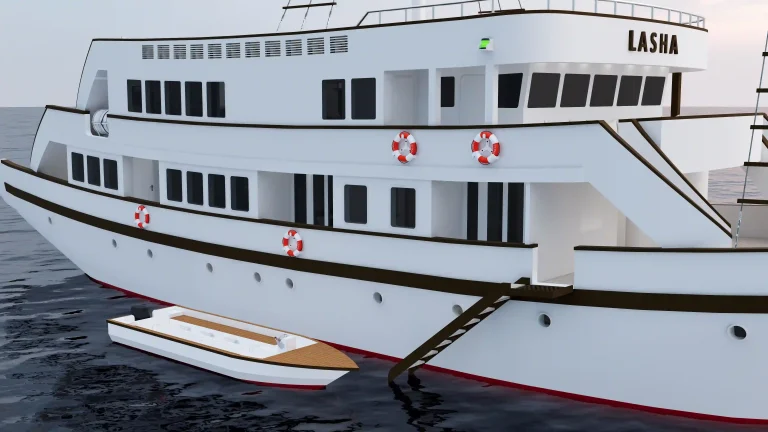
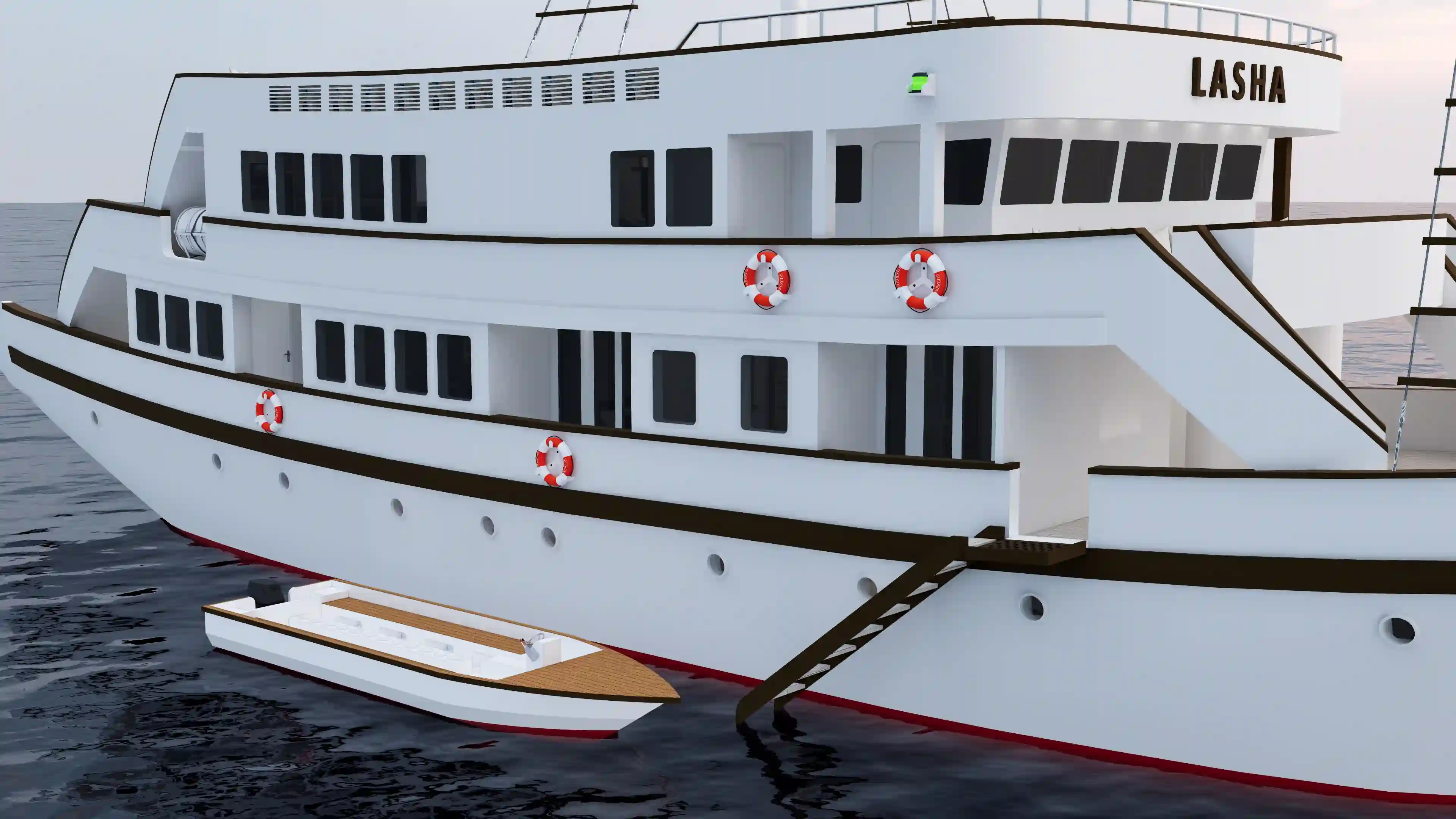
The primary argument for a custom build is one of absolute control. It’s the opportunity to collaborate directly with a naval architect and an interior designer to craft a vessel that is a perfect extension of your personal aesthetic and functional needs. You are not adapting to a previous owner’s compromises; you are dictating every detail. This process, when managed by a premier Bali yacht builder, is a journey of creation. Do you require a dedicated dive center with a Nitrox compressor? A climate-controlled wine cellar for 150 bottles? A galley designed by a Michelin-star chef? These are not refit afterthoughts; they are integrated into the vessel’s DNA from day one. A project I followed recently, a 40-meter luxury Phinisi, involved flying in a specialist from Italy just to oversee the installation of the marble in the master suite’s bathroom. That level of detail is the hallmark of a custom project.
Beyond aesthetics, a new build allows for the seamless integration of 21st-century technology. We’re talking about hybrid diesel-electric propulsion systems that reduce fuel consumption by up to 25% and allow for silent, emission-free anchoring in protected marine parks like Raja Ampat. It means installing the latest Seakeeper gyroscopic stabilizers, which can eliminate up to 95% of boat roll, transforming a choppy passage into a serene glide. Modern watermakers, waste treatment plants that exceed international standards, and cutting-edge navigation suites are all specified and installed to your exact requirements. This isn’t just about comfort; it’s about future-proofing your asset, ensuring it remains at the forefront of safety, efficiency, and environmental compliance for years to come. The build timeline, typically 18 to 24 months for a 30-meter vessel, is not a waiting period but an integral part of the experience.
Heritage on the High Seas: The Singular Case of the Indonesian Phinisi
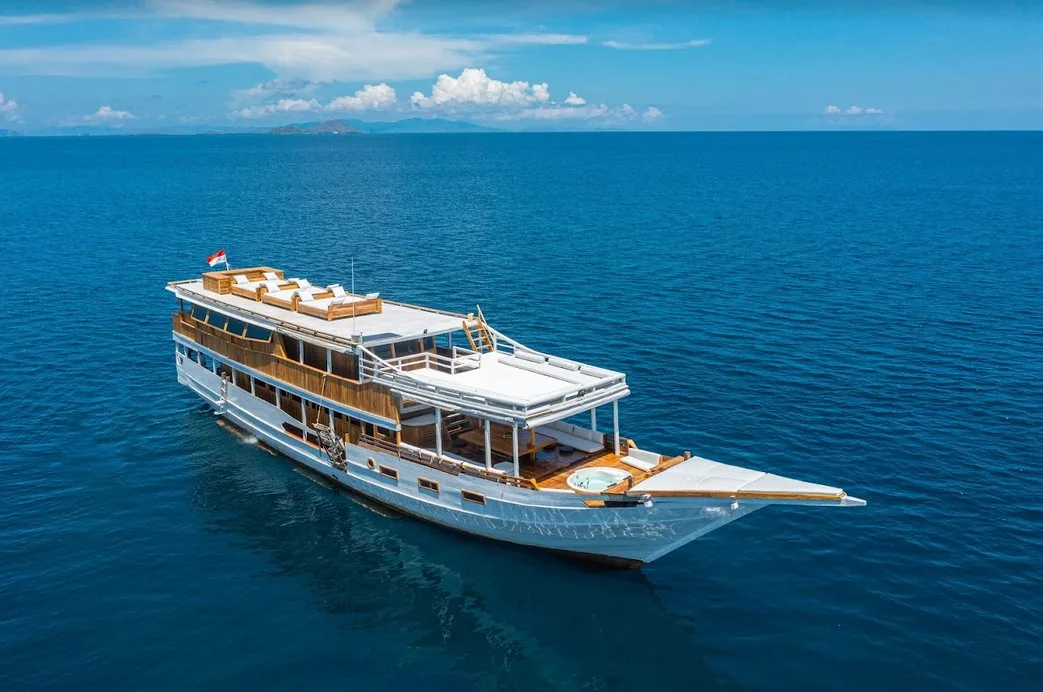
Nowhere is the argument for a custom build more compelling than with the Phinisi schooner. This is not simply a type of boat; it is a living piece of cultural history. The art of building these two-masted sailing ships, practiced by the Konjo people of South Sulawesi, was inscribed on UNESCO’s list of Intangible Cultural Heritage of Humanity in 2017. To commission a Phinisi is to become a patron of this ancient craft. Unlike a fiberglass catamaran from a European yard, a Phinisi is built by hand, plank by plank, using traditional techniques passed down through generations. The hull is constructed first, entirely by eye, without written blueprints. The ribs are inserted afterward—a method that defies conventional Western naval architecture.
What makes the modern Phinisi so remarkable is the fusion of this ancient soul with contemporary luxury. The world’s best Bali custom boat builders specialize in this synthesis. They honor the traditional form, using hardwoods like ironwood (kayu ulin) and teak, while engineering the vessel to modern safety and comfort standards. I spoke with Jean-Pierre Renaud, a naval architect who has consulted on several high-end Phinisi projects. “The challenge,” he told me, “is to hide the technology. We must incorporate a modern engine room, air conditioning, and stabilization without compromising the aesthetic and the spirit of the vessel.” The result is a yacht that feels both timeless and impeccably current. A pre-owned Phinisi exists, but it will always be a product of a previous owner’s era and vision. Building new allows you to write your own chapter in this vessel’s long and storied lineage.
The Pragmatist’s Play: Speed, Price, and the Pre-Owned Market
Of course, not everyone has a 24-month timeline or the inclination to debate the merits of different wood finishes for six weeks. The pre-owned market offers the immense advantage of immediacy. A suitable vessel can be surveyed, purchased, and sailing within a matter of months, not years. The brokerage hubs in Southeast Asia, like Singapore and Phuket, present a wide array of options, from sleek Italian motor yachts to robust expedition vessels. The initial financial outlay is, without question, lower. A five-year-old, 25-meter composite yacht might be acquired for 30-40% less than its new-build cost, as the steepest curve of depreciation has already occurred. This can free up significant capital for cruising, provisioning, and crew.
However, this path is paved with potential compromises. You inherit the boat’s history, both good and bad. A thorough pre-purchase survey, which can cost upwards of $5,000 for a mid-sized yacht, is non-negotiable. It may reveal hidden issues like hull osmosis, high engine hours nearing a major overhaul (a potential $150,000 expense), or outdated electronic systems. Then comes the refit. While you might save on the purchase price, transforming the vessel to your taste can be a costly and time-consuming endeavor. Sourcing the right materials and skilled labor in the region can be challenging. A client I know spent nearly $750,000 and ten months refitting a 30-meter pre-owned motor yacht in Thailand, a sum that could have served as a substantial down payment on a new, custom-built vessel tailored precisely to his specifications by expert custom Phinisi and luxury catamaran builders.
The Financial Equation: Depreciation, Resale, and Charter Potential
Let’s delve deeper into the numbers. A standard production yacht depreciates much like a luxury car, losing 15-20% of its value in the first year and leveling out to around 5-7% annually thereafter. A pre-owned boat has already taken that initial hit, making it a seemingly safer bet from a pure depreciation standpoint. However, the custom Indonesian Phinisi complicates this formula. Because of their unique heritage, quality of craftsmanship, and limited supply, a well-maintained, custom-built Phinisi can hold its value with remarkable tenacity. In some cases, especially for charter-proven vessels with a strong reputation, their value can even appreciate over time. They are seen less as a depreciating asset and more as a piece of functional art.
Furthermore, for those intending to operate their vessel commercially, building new in Indonesia offers a significant strategic advantage. A new vessel built in an Indonesian shipyard can be easily registered with the Indonesian flag (Merah Putih). This is critical for legally chartering within the archipelago, from the storied Spice Islands to the pristine reefs of Komodo National Park, a key destination highlighted by Indonesia’s official tourism board. Importing a foreign-flagged, pre-owned yacht and navigating the country’s cabotage laws to operate a commercial charter is a bureaucratic labyrinth, often involving complex ownership structures and significant legal fees. Building locally with a firm like bali yacht builder streamlines this entire process, creating a direct path to revenue and ensuring your investment is optimized for the region in which you intend to cruise.
Quick FAQ: Your Pressing Questions Answered
How long does a custom yacht build in Bali truly take?
While it varies with size and complexity, a high-quality, 30-to-40-meter luxury Phinisi or catamaran typically requires 18 to 30 months from contract signing to delivery. This timeline includes detailed design phases, material sourcing, construction, and sea trials.
Can I use my preferred international designer with Bali custom boat builders?
Absolutely. The top-tier builders in Indonesia are accustomed to collaborating with the world’s leading naval architects and interior designers. They welcome the partnership, blending international design sensibilities with their unique local craftsmanship to achieve a world-class result.
What are the primary materials used in traditional Indonesian boat building?
The foundation of a traditional Phinisi is tropical hardwood. The keel and hull are typically constructed from incredibly dense and water-resistant ironwood (known locally as kayu ulin), while the superstructure, decks, and interior are often crafted from high-grade teak. A Wikipedia article on Teak notes its durability and resistance to rot, making it ideal for marine environments.
Is financing available for a custom build project in Indonesia?
Financing a custom build is more complex than a standard boat loan but is certainly achievable. Established builders often have relationships with international and local financial institutions that specialize in marine asset financing and understand construction milestone payments. They can guide you through the process.
The Final Word from the Water’s Edge
The choice is not simple, and there is no single correct answer. The pre-owned market offers a logical, expedient path to ownership, a way to get on the water quickly and begin exploring these magnificent islands. It is a sound choice for many. But for the discerning individual for whom a yacht is more than a vehicle—for whom it is a sanctuary, a statement, and a legacy—the custom route is unparalleled. To stand on the raw timber that will one day become your deck, to choose the very grain of the wood for your master cabin, is to forge a connection with your vessel that no subsequent ownership can replicate. It’s an investment not just in an asset, but in an experience and a story that is uniquely yours. The journey begins with a conversation. To explore the possibilities of creating your own legacy on the water, connect with the master craftsmen at Bali Yacht Builder and begin shaping your dream.
Keep reading
Cost & Decisions
Pricing a Bali Custom Build: Labour, Materials and the Island Premium
The price of a custom build in Bali is set by four forces: labour (the island's skilled rates are competitive…
Cost & Decisions
Importing Materials Through Benoa: Duties on Build Components
Most of the high-value components in a Bali-built boat — engines, resin systems, rigging, electronics, deck hardware — arrive by…
Cost & Decisions
Indonesian Customs Clearance for Yachts: Import Duty, Export and Temporary Stay
Indonesian customs treats a yacht in one of three ways: an import (duty and taxes due), an export (a new…