How to Choose from the Best Bali Yacht Manufacturers Safely
Updated: May 2026
Choosing from the best Bali yacht manufacturers requires a methodical approach focused on legal, material, and technical verification. This process ensures your investment is secure and the final vessel is seaworthy. To do this safely:
- Confirm the builder operates under a legitimate PT PMA (foreign investment company) license to protect your ownership rights.
- Demand proof of SVLK certification for all timber, guaranteeing its legality and sustainable sourcing.
- Thoroughly vet their portfolio, conduct site visits, and speak directly with previous clients about long-term performance.
The air in the shipyard hangs thick with the scent of fresh-cut teak and the sharp tang of resin. Under the relentless Indonesian sun, the rhythmic tap-tap-tap of a hundred hammers on wood is a constant, a sound that has echoed through these islands for centuries. You watch as a massive ironwood rib, impossibly heavy, is maneuvered into place on the skeleton of a Phinisi schooner. This is the dream, the raw and romantic heart of Indonesian boat building. But as I’ve learned over two decades of covering the world’s most exclusive travel experiences for Departures, the line between a dream vessel and a financial shipwreck is drawn not with chalk on a workshop floor, but with diligent, unglamorous paperwork and rigorous vetting.
Beyond the Romance: The Legal Framework of Indonesian Boat Building
The image of a master craftsman shaping a hull by eye is a powerful one, but the modern reality of commissioning a multi-million dollar vessel requires a foundation far stronger than tradition alone. For any foreign national looking to build, the most critical element is the corporate structure. The safest, and frankly the only, legitimate way to own and operate a vessel in Indonesia is through a foreign investment company, known as a PT PMA (Penanaman Modal Asing). I once spoke with a Jakarta-based maritime lawyer who was blunt: “Any builder suggesting a ‘nominee’ arrangement or a simple lease-back deal is waving a colossal red flag.” These structures offer you zero legal protection and your seven-figure asset could vanish in a contractual dispute. Setting up a PT PMA is a formal process requiring a minimum investment plan of IDR 10 billion (approximately $650,000 USD) and navigating the Indonesian Investment Coordinating Board (BKPM). The process can take anywhere from 3 to 6 months, but it grants you 100% foreign ownership of the company that owns the yacht. This is non-negotiable. The premier Bali yacht builder will not only understand this but will insist upon it, guiding you through the process with their own legal counsel. It’s the first and most important sign that you are dealing with a professional organization, not just a talented group of carpenters.
The Soul of the Ship: Material Sourcing and Timber Legality
The character of a traditional Indonesian yacht is born from its timber. The two primary woods you’ll encounter are Ulin (Eusideroxylon zwageri), or ironwood, for the hull and structural members, and high-grade teak for decking and interiors. Ulin is a marvel of nature; with a density often exceeding 1.1 g/cm³, it is one of the few woods in the world that sinks in water, making it incredibly resistant to marine borers and rot. However, its popularity has led to significant issues with illegal logging. This is where your due diligence becomes an ethical imperative. Since 2013, Indonesia has implemented the SVLK (Sistem Verifikasi Legalitas Kayu), a mandatory timber legality verification system. You must demand an SVLK certificate for every piece of wood that goes into your vessel. Any hesitation from a builder on this point is a deal-breaker. I’ve seen firsthand in the traditional boat-building villages of Tanah Beru in South Sulawesi—a region recognized by UNESCO for its Phinisi-building heritage—that the most respected builders proudly display their timber certifications. The price reflects this; legally sourced, plantation-grown teak can exceed $2,000 per cubic meter. The best Bali yacht manufacturers are transparent about their supply chain, understanding that the vessel’s soul is not just in its design, but in its conscientious construction.
From Blueprint to Blue Water: Vetting a Builder’s Technical Expertise
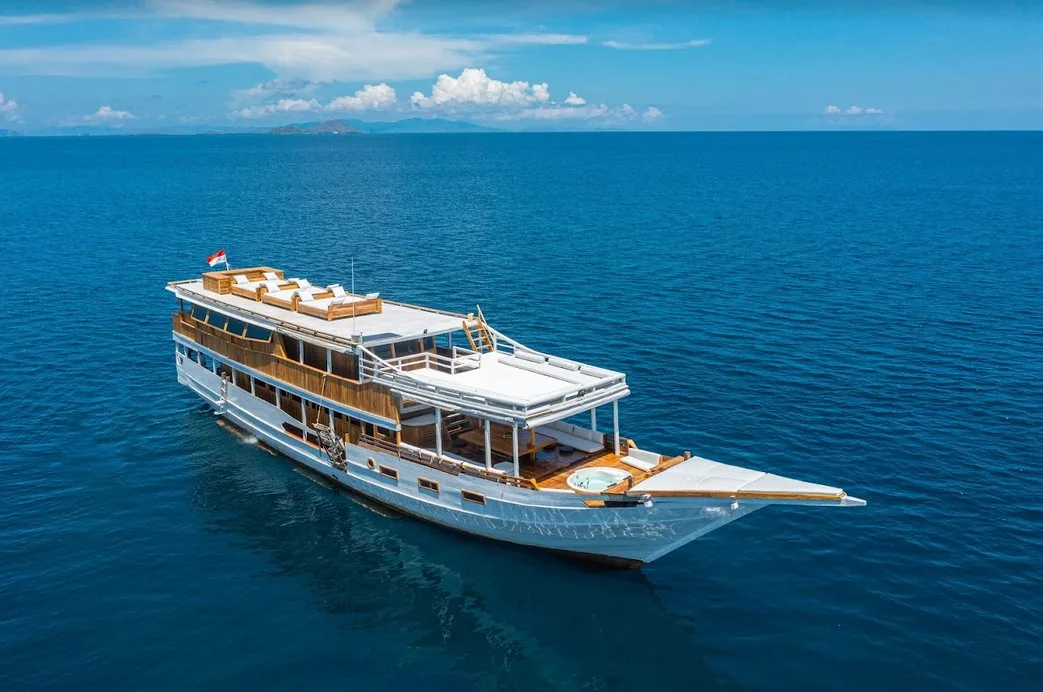
The genius of the Konjo people, the traditional master builders of the Phinisi, is their ancestral knowledge of hull dynamics and construction. They can build a seaworthy vessel from memory. However, a modern luxury charter yacht must meet a completely different set of standards for safety, comfort, and performance. The challenge is finding a builder who seamlessly merges ancient craft with modern naval architecture. When I inspect a shipyard, I look for more than just skilled woodworkers. I look for an in-house design team working with modern CAD and 3D modeling software. I ask about their approach to weight distribution, stability calculations, and systems engineering. A 35-meter luxury Phinisi is not just a hull; it’s a floating hotel with complex electrical, plumbing, and HVAC systems. The cost of marine-grade wiring, properly insulated and routed to avoid chafe and water intrusion, can account for up to 20% of the entire build budget. Ask a potential builder if they build to a specific classification society standard, such as RINA or Bureau Veritas. While full classification might be overkill for some private yachts, a builder who understands and can apply these principles demonstrates a commitment to international safety standards. A custom Phinisi and luxury catamaran builder worth their salt will be able to walk you through a detailed engineering plan before a single piece of wood is cut.
The Financial Voyage: Contracts, Payments, and Insuring Your Investment
No aspect of the build process requires more careful navigation than the financial arrangements. A handshake deal based on a beautiful sketch is a recipe for disaster. Your relationship with the builder must be governed by a comprehensive, legally binding contract drafted by a lawyer specializing in Indonesian maritime law. This document should meticulously detail every aspect of the build, from the exact specifications of the engines and generators to the brand of the galley appliances. The payment schedule should be tied to verifiable construction milestones, not arbitrary dates. A typical structure might be a 25-30% down payment to secure materials, followed by installments upon keel laying, hull completion, engine installation, interior fit-out, and final sea trials. Never, ever pay more than 50% of the total cost before the hull is complete and floating. Furthermore, insist on proof of a comprehensive Builder’s Risk Insurance policy. This covers the vessel against loss or damage from fire, theft, or catastrophic weather events during construction. The annual premium for this is usually around 1.5% of the hull value, a small price for immense peace of mind. The search for the best Bali yacht manufacturers should include a deep dive into their financial stability and contractual professionalism.
The Litmus Test: Site Visits and Client Conversations
You can learn more in a two-hour shipyard visit than in two months of email exchanges. Get on a plane. Walk the grounds. Is the facility organized and safe, or chaotic and littered with hazards? Observe the craftsmen. Is there a sense of pride and precision in their work? Jean-Luc Moreau, a marine surveyor I often consult with in Marseille, once told me, “The quality of a shipyard’s joinery is a window into the quality of its soul. If the details you can see are sloppy, imagine the shortcuts they’ve taken on the systems hidden behind the bulkheads.” But the most crucial step is to speak with their past clients. A reputable builder will eagerly provide a list of references. Don’t just ask if they are happy; ask specific, probing questions. How was the after-sales support for warranty issues? Were there significant cost overruns from the initial quote? How does the vessel handle in a 30-knot wind and a 3-meter swell? These are the real-world performance questions that separate a beautiful harbor ornament from a true ocean-going vessel ready to explore the 17,000 islands of the archipelago, from Komodo to Raja Ampat, as detailed by Indonesia’s official tourism board.
Quick FAQ: Navigating Your Bali Yacht Build
How long does a custom Phinisi build take?
For a high-quality, 30- to 40-meter luxury vessel, a realistic timeline is 18 to 24 months from contract signing to delivery. Rushing the process, particularly the critical wood-curing and systems-installation phases, is the most common cause of long-term problems. A 12-month build claim should be viewed with extreme skepticism.
What is a realistic budget for a luxury Phinisi?
The range is vast. A well-built, comfortable 25-meter Phinisi might start around $800,000. For a 40-meter vessel with high-end European systems, bespoke interiors, and a sophisticated dive setup, the cost can easily exceed $3 million. The interior fit-out and machinery choices are the biggest variables.
What is the biggest hidden cost to factor in?
Annual operational and maintenance costs. A standard industry rule of thumb is to budget 8-10% of the yacht’s initial purchase price for annual upkeep. This covers crew salaries, insurance, fuel, maintenance, and periodic dry-docking. For a $2 million yacht, that’s $160,000 to $200,000 per year.
Can I use my yacht for charter to offset costs?
Absolutely. This is one of the primary benefits of the PT PMA structure. Your company can obtain the necessary charter licenses (SIUPAL) to legally operate in Indonesian waters, turning your asset into a source of revenue. The charter market in areas like the Komodo National Park remains exceptionally strong, with weekly rates for luxury Phinisis ranging from $30,000 to over $100,000.
The journey of creating a custom yacht in Indonesia is an immersion into a deep and profound culture of maritime excellence. It is a collaboration between your vision and centuries of inherited skill. But this journey must be guided by prudence and a rigorous framework of verification. The process of selecting from the best Bali yacht manufacturers is not about finding the lowest bidder or the fastest; it is about finding a true partner who values transparency, legality, and engineering integrity as much as they do the elegant sheer line of a hull. When you are ready to transform a dream into a legacy asset, engaging with an expert team is the only way forward. The professionals at Bali Yacht Builder exemplify this modern approach, fusing the timeless art of the Phinisi with the uncompromising standards required for today’s luxury maritime world.
Keep reading

Cost & Decisions
Pricing a Bali Custom Build: Labour, Materials and the Island Premium
The price of a custom build in Bali is set by four forces: labour (the island's skilled rates are competitive…
Cost & Decisions
Importing Materials Through Benoa: Duties on Build Components
Most of the high-value components in a Bali-built boat — engines, resin systems, rigging, electronics, deck hardware — arrive by…
Cost & Decisions
Indonesian Customs Clearance for Yachts: Import Duty, Export and Temporary Stay
Indonesian customs treats a yacht in one of three ways: an import (duty and taxes due), an export (a new…