Building a Yacht in Bali: Teak vs. Fiberglass Hull Comparison
Updated: May 2026
- Tradition vs. Modernity: Teak connects to the UNESCO-recognized Phinisi legacy, while fiberglass allows for advanced hydrodynamic forms.
- Cost & Upkeep: Fiberglass has a lower initial cost and requires less maintenance. Teak demands skilled upkeep but can have a higher resale value.
- On-Water Feel: Wooden hulls offer a heavier, more stable motion, while GRP hulls are lighter, faster, and more agile.
A Tale of Two Hulls: The Core Decision in Indonesian Yacht Building
The air in the boatyard hangs thick and sweet, a heady cocktail of sawdust from tropical hardwoods and the sharp, chemical tang of curing resin. On my left, a team of Konjo craftsmen, their movements economical and precise after generations of practice, fit a massive ironwood plank into the curved ribs of a 40-meter Phinisi schooner. The rhythmic percussion of their mallets is a sound that has echoed through these South Sulawesi islands for centuries. To my right, inside a cavernous, climate-controlled shed, a different kind of artistry is underway. Figures in white coveralls meticulously lay sheets of woven glass fabric over a gleaming white mold, the beginnings of a high-performance catamaran. This juxtaposition is the central story for anyone considering the profound undertaking of building a yacht in Bali. It’s a choice not just between materials, but between two distinct maritime philosophies, each with its own soul, its own demands, and its own unique rewards sailing through the Coral Triangle.
The Soul of the Archipelago: Embracing Teak and Ironwood
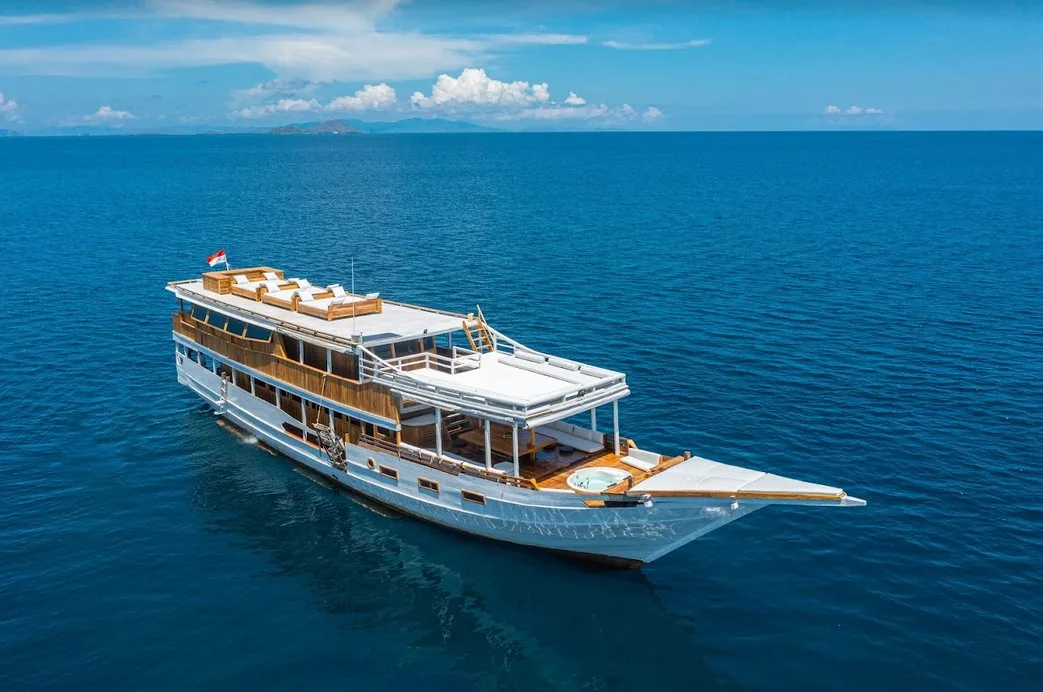
To understand the appeal of a wooden vessel in Indonesia is to understand the Phinisi. In 2017, UNESCO officially recognized the “Art of boatbuilding in South Sulawesi” as an Intangible Cultural Heritage of Humanity, a testament to a tradition that extends back hundreds of years. This is not simply construction; it is cultural expression. The primary materials, teak (Tectona grandis) and ironwood (Ulin), are characters in this story. As I learned from a master builder in Tanah Beru, “The wood has a memory. It knows the sea.” High-grade teak, with its natural oil content often exceeding 8% by weight, is exceptionally resistant to rot and marine borers. Ironwood, used for the keel and frames, is so dense—over 1.1 g/cm³—that it sinks in water, providing a low, stable center of gravity. Building with these materials is a long, organic process. There are no detailed blueprints, only generations of knowledge passed down, with builders making ritual offerings before the first plank is laid. The resulting vessel moves through the water differently. There is a weight, a presence. The wood absorbs sound and vibration, creating a serenely quiet interior. It acts as a natural insulator, keeping cabins cooler under the equatorial sun, a significant advantage when cruising the 17,000 islands of the archipelago.
Fiberglass: The Modernist’s Choice for Indonesian Waters
While tradition holds a powerful allure, the practical realities of modern yacht ownership and charter operations have made fiberglass, or Glass Reinforced Plastic (GRP), an increasingly compelling choice. The process is one of precision engineering rather than inherited artistry. A female mold is created, allowing for hull shapes of immense complexity and hydrodynamic efficiency. Jean-Luc, a French naval architect I spoke with who has overseen builds in Bali for over 15 years, put it plainly: “With GRP, we can design a hull that is 20% more fuel-efficient and can achieve speeds double that of a traditional displacement hull of the same length.” This matters when your itinerary involves covering the 560 nautical miles from Bali to the world-class dive sites of Raja Ampat. Maintenance is another decisive factor. A GRP hull is a monolithic structure, impervious to shipworms and rot. There is no annual ritual of re-caulking seams. A minor collision that might splinter a wooden plank can often be repaired with relative ease and speed by a skilled technician, minimizing costly downtime. Modern marinas, like those in Benoa and Serangan, are fully equipped to handle GRP vessel maintenance, offering a global standard of service that provides peace of mind for international owners. For those looking to build a fleet of sleek, reliable charter catamarans, the consistency and durability of fiberglass construction present an undeniable business case.
The Cost Equation: Initial Investment vs. Lifetime Ownership
When you commission a vessel from a premier Bali yacht builder, the financial conversation is nuanced, extending far beyond the initial price tag. Generally, a fiberglass hull will have a lower upfront cost. The ability to use a mold for multiple hulls and the less labor-intensive construction process can result in an initial build cost that is 25-35% lower than a comparable custom Phinisi built from top-grade, legally sourced ironwood and teak. Sourcing that timber is a significant line item; certified, aged hardwoods are a premium commodity. However, the true cost of ownership emerges over the vessel’s lifespan. A wooden yacht is a living thing that requires constant care. Annual haul-outs for inspection, sanding, re-caulking, and painting are non-negotiable. Experts estimate the annual maintenance cost for a wooden vessel can run between 5-10% of its total value. In contrast, a fiberglass boat’s upkeep is far less demanding, typically falling in the 2-4% range, primarily for antifouling, engine servicing, and polishing the gelcoat. The intriguing variable is resale value. A well-maintained fiberglass yacht depreciates much like a luxury car. A classic, hand-built Phinisi, however, is often viewed as functional art. If maintained to a high standard, it can hold its value remarkably well, and in some cases, even appreciate over time as the number of master craftsmen capable of building them slowly declines.
Performance at Sea: The On-Water Experience
The choice of hull material fundamentally dictates how you will experience the Indonesian seascape. A traditional wooden Phinisi, with its heavy displacement hull, offers a majestic and gentle ride. It doesn’t slap against the waves; it parts them with a reassuring ‘whoosh’. This inherent stability makes for exceptionally comfortable passages, ideal for multi-day liveaboard cruises through archipelagos like Komodo, as described on the official indonesia.travel portal. The sheer mass of the vessel smooths out the motion in a rolling sea, reducing the likelihood of seasickness for guests. The trade-off is speed; a cruising speed of 7-9 knots is typical. Conversely, a fiberglass yacht, particularly a catamaran, is built for performance and agility. Its lighter weight and planing or semi-displacement hull design allow it to achieve speeds of 15-20 knots or more. This opens up itineraries, allowing you to island-hop from Lombok to Sumbawa in a single day. The experience is more exhilarating, more connected to the power of the engines and the design of the hull. Yet, it can also be noisier, with the characteristic ‘thump’ of the GRP hull hitting chop. The custom Phinisi and luxury catamarans offered by leading builders cater to these divergent desires, one prioritizing serene passage, the other prioritizing speed and destination access.
Sustainability and Sourcing in the 21st Century
For the conscientious owner, the environmental impact of their vessel is a paramount concern. Both materials present challenges. For wood, the critical issue is legal and sustainable sourcing. Indonesia has made significant strides with its Timber Legality Verification System (SVLK), a mandatory certification for all exported wood products. A reputable bali yacht builder will provide a complete chain-of-custody for every plank, ensuring it comes from a responsibly managed forest and not a protected national park. The alternative, using reclaimed wood from old structures, is an even more sustainable but often more expensive option. Fiberglass, on the other hand, faces scrutiny for its origins and end-of-life. Its production is energy-intensive, relying on petroleum-based resins. More pressingly, disposing of a GRP hull after its 50-plus-year lifespan is a significant environmental problem, as it is not biodegradable and difficult to recycle. While some yards are experimenting with more eco-friendly bio-resins or basalt fibers, these technologies are still on the industry’s fringe. The most sustainable approach often involves a hybrid solution: a responsibly sourced wooden superstructure atop a modern, efficient GRP hull, minimizing the use of both materials while leveraging their respective strengths.
Quick FAQ: Your Bali Yacht Build Questions Answered
How long does it take to build a custom yacht in Bali?
The timeline varies significantly with size and complexity. A 30-meter traditional wooden Phinisi, built from scratch using time-honored methods, typically takes 18 to 24 months. A comparable GRP motor yacht or catamaran can often be completed more quickly, in a 12 to 18-month timeframe, thanks to the efficiencies of mold-based construction.
Is a teak deck possible on a fiberglass hull?
Absolutely. This is an extremely popular hybrid approach that captures the best of both worlds. Owners get the low-maintenance, high-performance benefits of a GRP hull combined with the classic, non-slip, and luxurious feel of a traditional teak deck. It’s a common specification when building a custom yacht in Bali.
What are the legalities of flagging a yacht built in Indonesia?
Navigating Indonesian maritime law can be complex. It involves classification with the Biro Klasifikasi Indonesia (BKI) and understanding foreign ownership regulations. According to Wikipedia’s overview of international shipping, many owners opt for a flag of convenience like the Marshall Islands or Cayman Islands for easier international cruising. A seasoned builder is essential to manage this intricate legal and administrative process seamlessly.
Can I integrate modern systems into a traditional wooden boat?
This is a hallmark of building in Bali. The island’s craftsmen excel at blending ancient hull construction techniques with the installation of state-of-the-art systems. It’s common to see a hand-built Phinisi equipped with modern navigation suites, powerful watermakers, dive compressors, and sophisticated entertainment systems, offering ultimate comfort without sacrificing authenticity.
The decision between teak and fiberglass is more than a technical specification; it is the first chapter in your vessel’s story. It defines its character, its rhythm on the water, and its relationship with the sea. One path leads to a floating piece of cultural heritage, a testament to ancient skill. The other leads to a vessel of modern performance, engineered for speed and efficiency. The journey of building a yacht in Bali is as rewarding as any destination it will eventually take you to. To navigate these choices with expert guidance, connect with the master craftsmen and project managers at Bali Yacht Builder. They don’t just build boats; they help you realize a vision, plank by plank, or layer by layer.
Keep reading
Build Guides
2027 Bali Building Outlook: Catamarans Rise, Phinisi Endure
Bali enters 2027 with its boatbuilding order books in the healthiest shape of the decade. Four currents define the outlook:…
Build Guides
Build Timelines in Bali: Why Island Logistics Add Weeks, Not Months
The honest answer about Bali build timelines: island logistics add weeks to a well-run schedule, not months — and the…
Build Guides
The Two-Island Build: Hulls From Sulawesi, Fit-Out in Bali
Indonesia's most proven route to a large timber vessel is a two-island relay: the hull takes shape in the master…