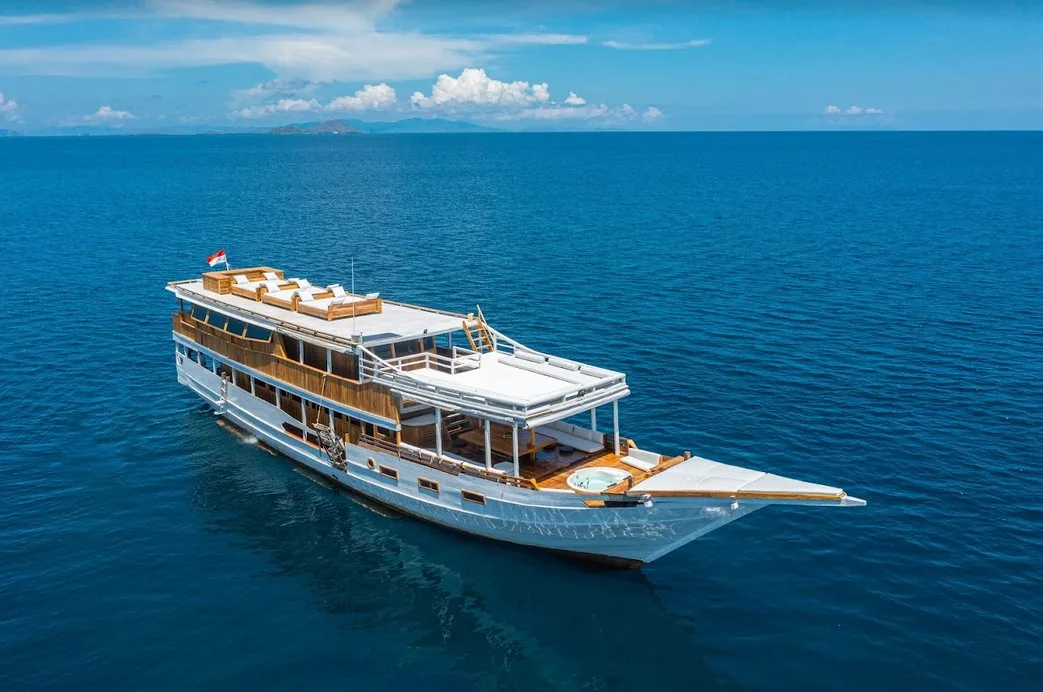
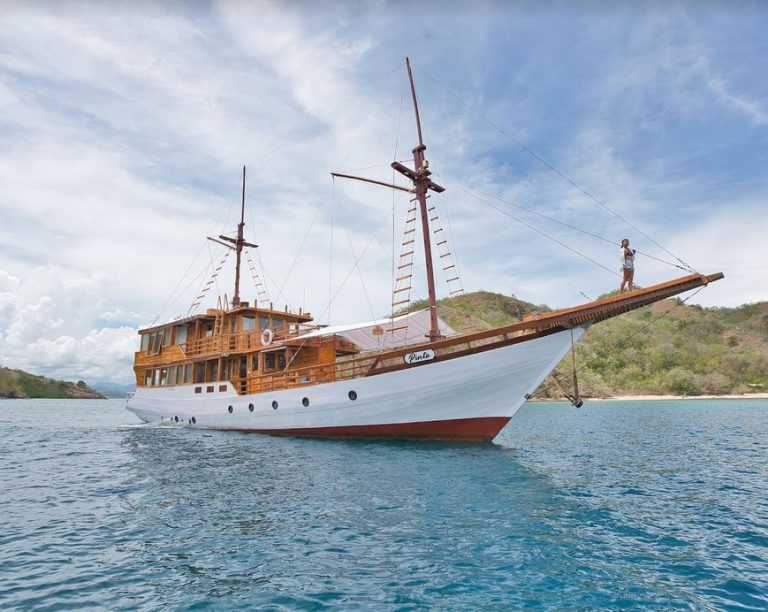
How Much Does Building a Custom Phinisi Yacht in Bali Cost?
Updated: May 2026
- Entry-Level Charter (25-30m): $500,000 – $800,000
- Mid-Range Luxury (35-45m): $1.2 Million – $2.5 Million
- Bespoke Superyacht (50m+): $3 Million – $5 Million+
The air in the boatyards of South Sulawesi hangs thick and aromatic, a heady mix of clove-scented kretek smoke, the sharp tang of curing teak, and the faint, salty promise of the Flores Sea. Mallets strike wooden dowels with a syncopated rhythm that has echoed along these shores for centuries. Here, on the sun-baked sand, a vessel is taking shape. It is not merely a boat; it is a phinisi, a living testament to an Indonesian maritime legacy. For a discerning few, the question isn’t just about chartering one of these magnificent ships, but about commissioning one. It’s a journey into the heart of Indonesian craftsmanship, but it begins with a very pragmatic question: What is the real cost to build a yacht in bali?
Deconstructing the Phinisi Price Tag: More Than Timber and Sails
From my conversations with shipyard owners in Bali and master builders in Bira, one thing is clear: quoting a price for a custom phinisi is not like pricing a production yacht. There is no options list to check off. Instead, the final figure is an alchemy of four distinct, and highly variable, cost centers: the hull construction, the interior fit-out, the marine engineering, and the labyrinth of legal and classification requirements. The initial investment is in the timber itself. The hulls are almost exclusively built from Ulin, or ironwood, a dense tropical hardwood so resilient it’s often used for marine pilings. A single cubic meter of quality Ulin can command a price of over $2,000. For a 40-meter phinisi, which might require upwards of 250 cubic meters of wood for the hull and structure, the raw timber cost alone can exceed $500,000 before a single plank is shaped. The superstructure and interiors then call for vast quantities of high-grade teak, further escalating the material budget. This initial phase, steeped in tradition, sets the financial foundation for the entire project, representing a significant portion of the total investment.
The Hull Truth: Traditional Craftsmanship Meets Modern Budgets
The soul of every phinisi is born on the beaches of South Sulawesi, particularly in the villages of Tana Beru and Ara. Here, the Konjo people practice a boat-building art form so unique it was inscribed on the UNESCO list of Intangible Cultural Heritage of Humanity in 2017. Working from memory and instinct rather than digital blueprints, these masters construct the hull plank by plank. It is a powerful, elemental process to witness. The cost of this initial stage is surprisingly modest, given the skill involved. A raw, unfinished 30-meter hull might cost between $150,000 and $250,000. A larger, more robust 45-meter hull could run from $400,000 to $600,000. However, this is merely the vessel’s skeleton. Once seaworthy, this massive wooden shell must be towed from Sulawesi to a finishing yard, typically in Bali or Batam. This critical journey across the Java Sea, a distance of over 700 nautical miles, is a project in itself, costing anywhere from $15,000 to $30,000 and taking several weeks. It’s at the finishing yard where the traditional hull meets modern luxury, and where the budget begins to climb exponentially. This is where a premier Bali yacht builder takes over, transforming the raw form into a world-class vessel.
Interior Fit-Out: Where Charter Dreams Take Shape (and Budgets Swell)
The interior fit-out is the single greatest variable in determining the final cost. This is where an owner’s vision—and budget—can truly run wild. The spectrum is vast. At one end, a functional and durable charter finish using laminates, locally sourced fabrics, and standard marine-grade fixtures might add $400,000 to a 35-meter build. At the other end, a private yacht intended to rival a five-star resort is a different financial proposition entirely. One owner I spoke with specified hand-stitched leather wall panels, book-matched marble in every ensuite, and a custom wine cellar for 150 bottles. His interior budget alone exceeded $1.8 million. A commercial-grade galley, capable of serving 12 guests three gourmet meals a day, can cost over $100,000. A state-of-the-art audio-visual and IT system can easily add another $80,000. As a rule of thumb, builders often estimate interior costs on a per-cabin basis. A simple, comfortable guest cabin might be budgeted at $60,000, while an opulent master suite with a private balcony, walk-in wardrobe, and custom-built furniture can soar past $250,000. This is the phase where a project’s character is defined, and where meticulous project management from an experienced custom phinisi specialist is paramount to controlling costs.
The Engine Room: The Unseen Cost of Modern Reliability
While the romance of the phinisi lies in its iconic twin masts and seven sails, the reality of modern yachting, especially for the lucrative charter market, depends on what’s in the engine room. Reliability is non-negotiable when you have guests paying $60,000 a week to explore remote corners of Raja Ampat. The propulsion system is the first major expense. A pair of new, reliable marine diesel engines from a reputable brand like Yanmar or Mitsubishi for a 40-meter phinisi will typically cost between $80,000 and $150,000, installed. To power the air conditioning, water makers, and hotel loads for 12 guests, you’ll need at least two, and often three, powerful generators, adding another $40,000 to $70,000. A high-capacity water maker, essential for extended voyages, can be a $25,000 item. Furthermore, operating in pristine marine environments like Komodo National Park requires a certified waste treatment system, a legal and ethical necessity that adds another $20,000. The modern navigation and communication suite—including radar, sonar, chart plotters, and satellite communications—is another area where skimping is not an option, and a comprehensive package can easily exceed $100,000. This mechanical and electrical backbone is the unseen, unglamorous, yet utterly critical investment that separates a weekend cruiser from a true ocean-going explorer.
The “Soft Costs”: Navigating Bureaucracy, Classification, and Design
Beyond the tangible costs of wood, steel, and engines lie the “soft costs”—the professional services and administrative hurdles that are crucial for a successful and legal build. These often surprise first-time owners. It begins with the design. Fees for a qualified naval architect and an interior designer can amount to 5-10% of the total build cost. On a $2 million project, this means an upfront investment of $100,000 to $200,000 is standard. Next is classification. To operate a yacht commercially for charter in Indonesia, it must be built to the standards of a recognized classification society, typically Biro Klasifikasi Indonesia (BKI). This involves rigorous plan approvals and on-site inspections throughout the build, adding $50,000 to $100,000 in fees and compliance costs. Then comes the legal framework: flagging the vessel under the Indonesian flag, obtaining the necessary operational licenses, and navigating the import duties on foreign equipment. This complex legal process can cost another $30,000 to $60,000. Finally, there’s the cost of oversight. An owner’s representative or a dedicated project manager is essential to ensure the build stays on schedule and on budget. This is why partnering with an established Bali yacht builder is so critical; they have the experience to anticipate and manage these often-overlooked expenses from the outset.
Quick FAQ: Your Phinisi Cost Questions Answered
How long does it take to build a custom phinisi?
A typical build timeline ranges from 18 to 36 months. A straightforward 30-meter charter phinisi might be completed in 18-24 months. A larger, more complex 50-meter vessel with a highly bespoke interior can easily take over three years from the initial design sketches to its maiden voyage.
Are phinisis built in Bali more cost-effective than European yachts?
Yes, dramatically so. On a cost-per-gross-ton basis, a phinisi built in Indonesia represents immense value. A new 45-meter phinisi delivered for $2.5 million would be a fraction of the €15-€20 million price tag for a motor yacht of similar volume from a Dutch or Italian shipyard. This value is driven by lower skilled-labor costs and access to local materials like teak and ironwood.
What are the annual running costs of a phinisi yacht?
The industry standard for estimating annual operational costs is 8-10% of the vessel’s initial build cost. For a phinisi valued at $2 million, an owner should budget for $160,000 to $200,000 per year. This covers crew salaries (a 40m phinisi requires a crew of 10-15), fuel, routine maintenance, insurance, and mooring or park fees as detailed by official sources like indonesia.travel.
Can a foreigner legally own a phinisi in Indonesia?
Yes. The most common and secure method is through a foreign investment company structure known as a PMA (Penanaman Modal Asing), which is set up specifically to own and operate the vessel, particularly for charter purposes. Navigating this legal process requires expert guidance from a maritime lawyer and a builder experienced in foreign-owned projects.
To commission a phinisi is to become a patron of a living art form. It is an investment not just in a vessel, but in a legacy—a floating masterpiece that connects you directly to the history and soul of the Indonesian archipelago. The numbers, while significant, only tell part of the story. The true value lies in the journey itself, a collaboration between your vision and the unparalleled skills of Indonesian craftsmen. For those ready to translate this dream into a tangible blueprint, the journey begins with a conversation. The master craftsmen and project managers at Bali Yacht Builder specialize in navigating this intricate process, from the first sketch on a napkin to the celebratory shattering of champagne on an ironwood bow. To begin charting your course, contact a premier bali yacht builder today.
Keep reading

Cost & Decisions
Pricing a Bali Custom Build: Labour, Materials and the Island Premium
The price of a custom build in Bali is set by four forces: labour (the island's skilled rates are competitive…
Cost & Decisions
Importing Materials Through Benoa: Duties on Build Components
Most of the high-value components in a Bali-built boat — engines, resin systems, rigging, electronics, deck hardware — arrive by…
Cost & Decisions
Indonesian Customs Clearance for Yachts: Import Duty, Export and Temporary Stay
Indonesian customs treats a yacht in one of three ways: an import (duty and taxes due), an export (a new…